













































– Psychologist Nivya Ranjith
Member, American Psychological Association
Counseling Psychologist, APA Treasurer
Technological advancements are growing rapidly through different eras. People’s thinking patterns are changing, and lifestyles are evolving. However, along with this, serious psychological and social impacts are increasingly being observed, especially among adolescents and youth.
Even though digital gadgets are meant to bring progress, excessive attachment to mobile phones is causing both positive and negative effects in various aspects of life. The over-dependence on mobile phones has now become a global issue.
Many are experiencing sleeplessness and waking issues due to their mobile usage habits. If there is a mobile phone with internet connectivity nearby, it’s hard for even children or older adults to spend a day without checking it. Whether it’s meetings, social interactions, financial dealings, meals, or sleep — everything now revolves around that single device.
So, a question arises: Has this object become so deeply rooted in our lives that we can’t function without it?
Some people experience extreme anxiety when their phone is misplaced, runs out of charge, or loses network signal. There are even instances of people panicking or becoming visibly distressed when unable to check notifications. Even a short time without mobile usage in certain situations leads to restlessness and discomfort in some individuals.
This condition is known as “Nomophobia” – a fear of being without a mobile phone.
It refers to the anxiety or fear of not being able to stay updated in the digital world — fear of missing messages, calls, or updates due to network unavailability. Even when awake, eating, or sleeping, many people feel the urge to constantly check their phones, leading to over-dependence.
People are even collapsing with exhaustion or falling asleep while holding their phones. When this starts affecting sleep quality and daily functioning, the phone becomes a source of harm instead of help.
Nomophobia is not limited to any age group — it affects a wide range of people. It is now recognized as a psychological condition that affects your physical, mental, emotional, and social stability.
Symptoms of nomophobia may include:
- Irritation and mood swings
- Difficulty sleeping
- Constant checking
- Lack of focus
- Anxiety and distress
- Fear of intimacy
- Reduced physical communication
- Relationship issues
- Emotional withdrawal
- Reduced productivity at work
- Financial losses due to overuse
It may also lead to relationship breakdowns and emotional detachment, sometimes resulting in non-substance-based addiction. The core issue of nomophobia is that people are unknowingly allowing one device to take over every aspect of life.
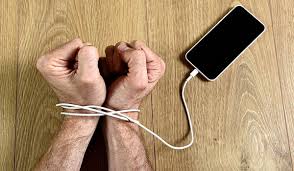
Let’s remember: Addiction is not always about substances. It’s not just that we are addicted to our phones — it’s more like our phones have taken control of us.
It’s not about completely rejecting or avoiding mobile phones, but about being conscious and in control of your usage. Use your devices wisely, not for your downfall — but for your happiness and success.